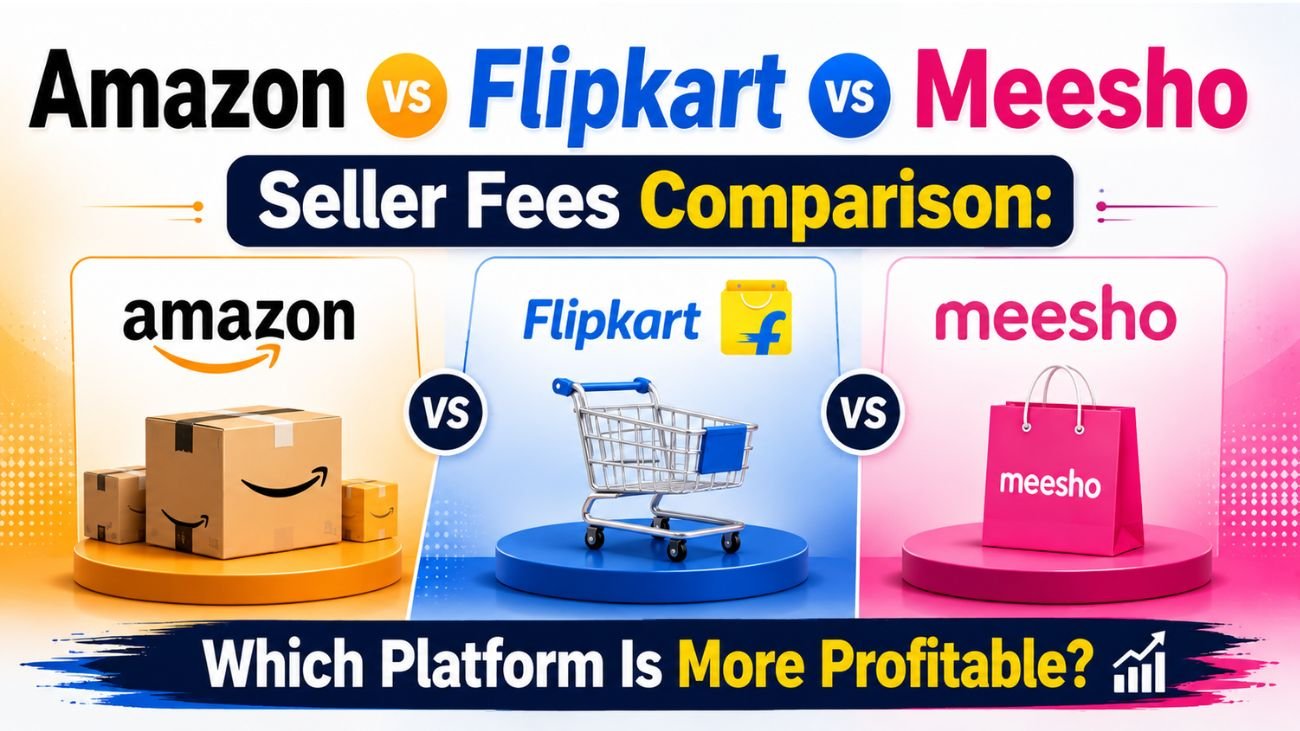
Amazon vs Flipkart vs Meesho Seller Fees Comparison: Which Platform Is More Profitable In 2026

Selling online looks easy until the payout lands, and it’s less than you expected. Between commissions, shipping fees, and those tiny “mystery” deductions, it’s easy to lose track of what you actually make per order.
If you’re a new or mid-level seller in India trying to pick the right marketplace in 2026, knowing the real cost of selling on Amazon, Flipkart, and Meesho can save you from nasty surprises later.
This guide breaks down exactly what each platform charges and shows you how to estimate your take-home profit before you list even a single product.
Why nailing your cost structure in 2026 isn’t optional; it’s survival
Online selling in India right now? Brutal. Everyone’s on every platform; ads cost more, and margins? Thinner than a ₹10 note. That “profitable” product you spotted? Could vanish once Amazon’s closing fee, Flipkart’s shipping surcharge, or Meesho’s RTO and return-related charges.
Smart sellers don’t guess anymore; they crunch numbers before listing. Period. Know your exact costs upfront, price so you actually keep cash, and pick the marketplace that doesn’t eat your profit for breakfast.
Get this right, and you’re not just surviving 2026; you’re scaling while others wonder where their money went.
What Amazon Charges Sellers
Amazon’s fees stack up in layers, and each layer chips away at what you actually take home. First, there’s the referral fee. A percentage of your selling price that changes by category. Then comes the closing fee, a flat charge per order that depends on your price band.
Shipping is next, and it varies widely depending on whether you use FBA, Easy Ship, or handle it yourself. And don’t forget GST, 18% on top of all these charges, so the number you see on the fee sheet isn’t your real payout.
That’s exactly why an Amazon price calculator is a lifesaver: you drop in your product price and category, and it spits out your estimated payout after all deductions, so you know your actual margin before you even list.
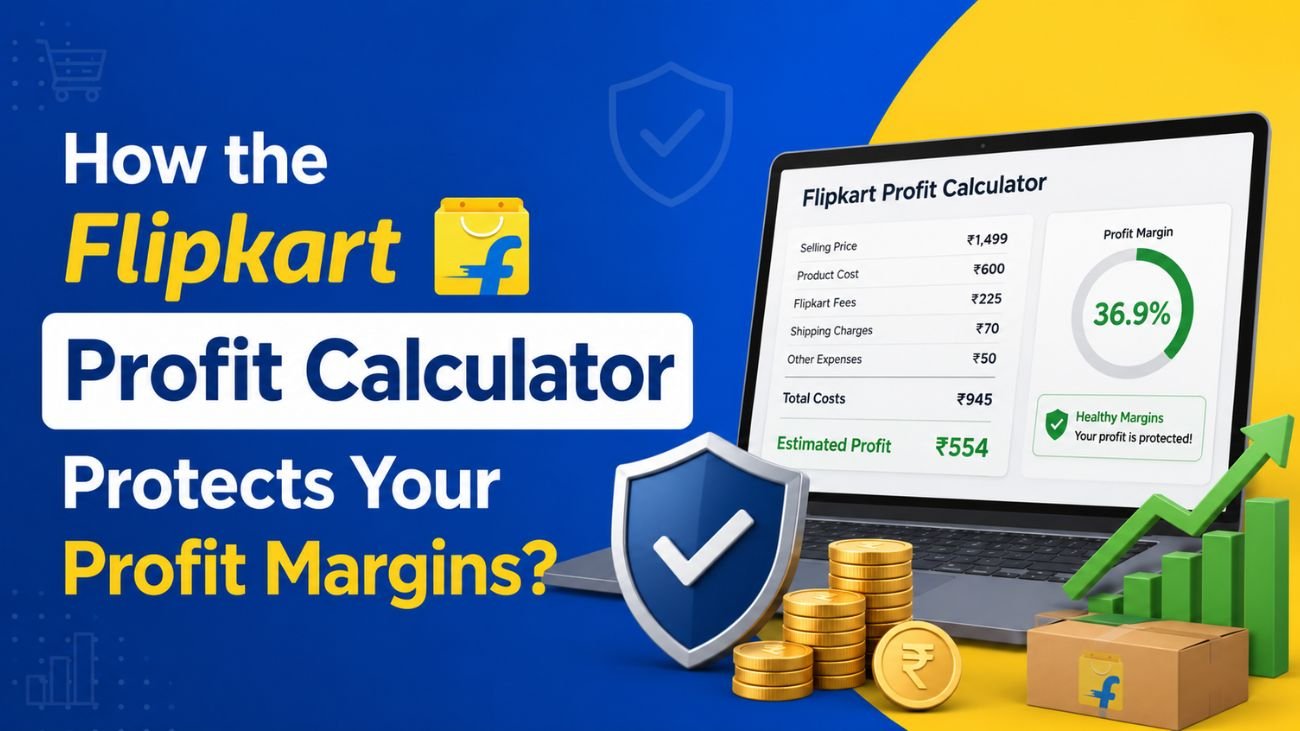
How Flipkart’s Commission Structure Works
Flipkart doesn’t charge one flat “commission” across your entire catalog; what you pay actually shifts with every product you list. Think of it like this: your category decides the commission % (mobiles might be 4–5%, apparel can climb to 15–17%, and some sub-₹1,000 items even hit 0% now), then on top of that you’ve got a collection fee (roughly 1.8–2% for prepaid, a bit higher for COD), a fixed fee that jumps by price slab (₹10–₹100-ish per order), and shipping that moves with weight and distance.
Many new sellers assume a single percentage and get surprised when payouts don’t match, so the smart move is to check your exact product’s commission slab before you price. Do that once, and your profit picture gets way clearer from day one.
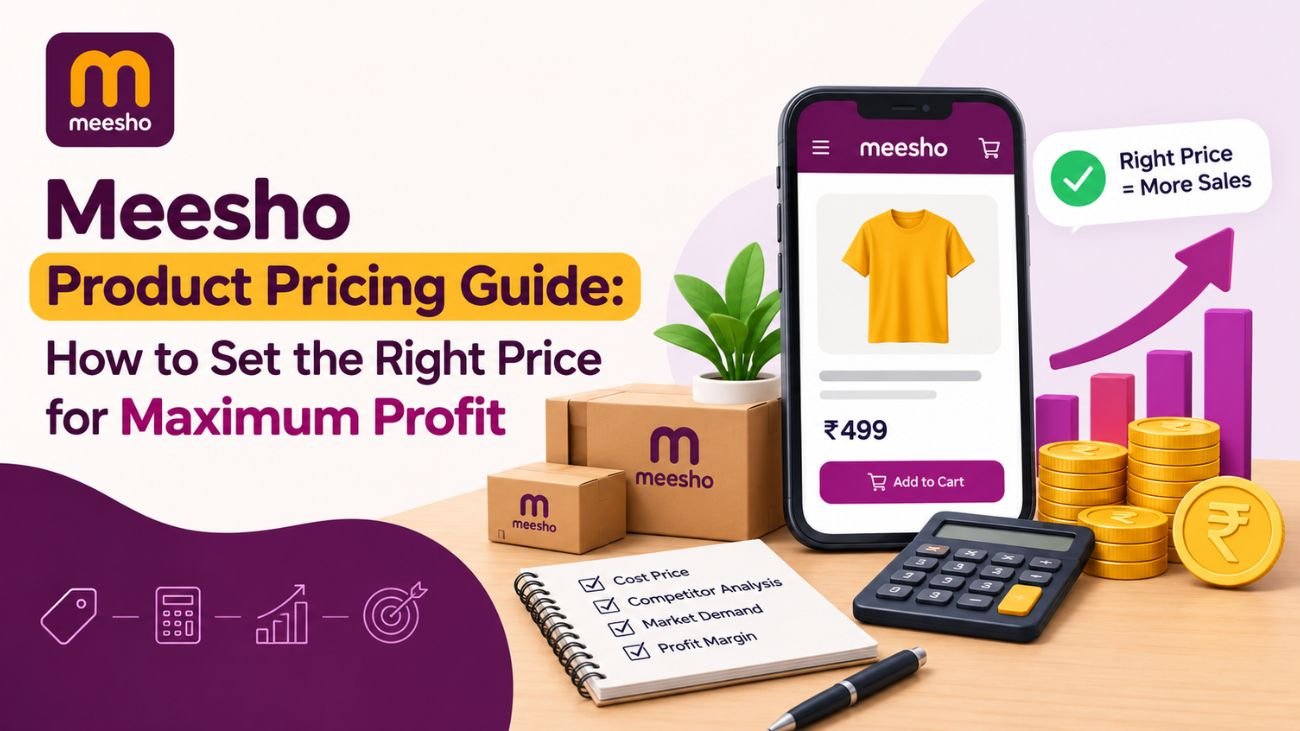
Meesho’s Cost Model for Sellers
Everyone talks about Meesho’s 0% commission. But here’s the thing: “zero commission” isn’t the same as “zero cost.” Not even close. You still pay shipping on every delivered order, plus 18% GST on those logistics fees, which adds up faster than you’d think.
Moreover, if you’re in fashion? Be careful. High return rates can wreck your margin because you’re charged reverse shipping when customers send items back. Since your actual cost changes with weight, zone, and category, don’t just guess.
A Meesho price calculator is the only way to know whether a product is genuinely profitable or looks cheap because no commission was deducted upfront.
Comparison Across All Three Platforms
| Factor | Amazon | Flipkart | Meesho |
| Commission Type | Category-based referral fee | Category-based commission | Low or zero-commission (category dependent) |
| Extra Charges | Closing fee, shipping, GST | Collection fee, fixed fee, shipping | Shipping and return charges |
| Best Suited For | Established brands, wide reach | Mid-to-large sellers, broad categories | New sellers, budget or unbranded products |
| Fee Predictability | Moderate | Moderate | Higher |
Choosing the Right Platform for Your Business
One thing you need to understand is that you cannot give the tag of winner to any single platform, as this depends entirely on the product you are selling and where you are starting. However, if you are new to selling, just like many other sellers, you will find Meesho much easier than other platforms because of its upfront costs.
A seller with steady volume and a category will find the Flipkart commission slabs more manageable and predictable, whereas a strong seller with years of experience in branding chooses Amazon despite its high fees. Why is it so? This is because of Amazon’s good reach and customer trust.
So before making the final decision for your product, run your product numbers through each platform’s calculator. So that the right decision can be made based on real figures without doing any guesswork.
Final Take
Before you list anywhere, just run your product price through the right marketplace calculator. Most new-to-mid sellers in India get blindsided by “hidden” line items like closing fees, volumetric weight charges, GST on fees, and return/RTO drag, so a quick check stops you from under-pricing and wondering why sales don’t feel profitable. Remember, a five-minute check now can save you from quiet profit leaks that nibble away at your margins every single month.