Amazon FBA vs FBM in 2026: Which Fulfillment Model Should Sellers Choose?

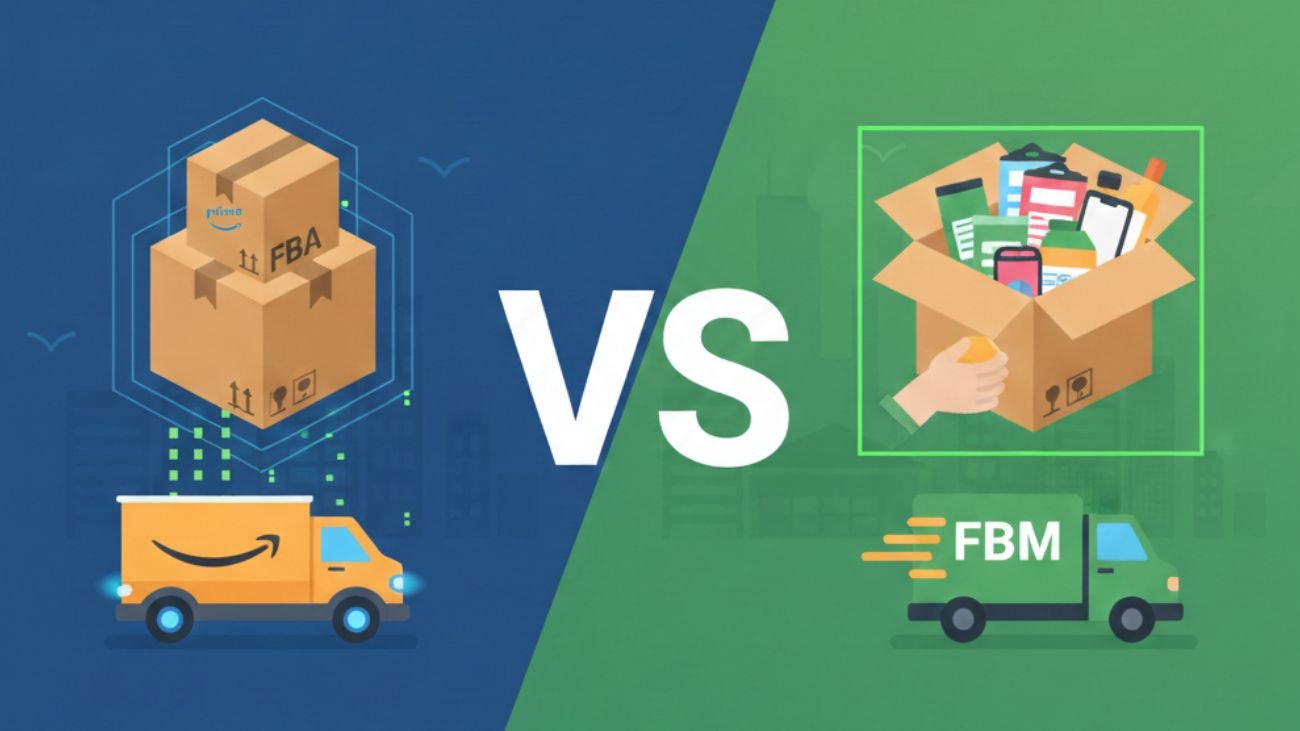
E-commerce is expanding with every passing day; be it Amazon, Flipkart, or various other marketplaces. In the case of an Amazon seller, they face challenges when deciding between Fulfillment by Amazon(FBA) or Fulfillment by Merchant(FBM). These alternative models have their own benefits and difficulties. We will discuss the same in this blog.
According to statistics, nearly 82% of users rely on Amazon FBA, and 34% use Amazon FBM.
- FBA only: 64%
- FBA & FBM: 14%
- FBM only: 22%
To help you make an informed decision while choosing between FBA and FBM, we will walk you through the differences between Amazon FBM and FBA, and help you understand the factors to consider before choosing a fulfillment method. You can also consult the Amazon account management services for professional assistance.
What is Amazon FBA and Amazon FBM?
Fulfillment by Amazon(FBA): FBA is a fulfillment method on Amazon where sellers ship their products to the Amazon fulfillment centers. Amazon has numerous fulfillment centres in India.
Amazon stores the seller’s inventory and deals with storage, packing, shipping, customer care, and returns. The sellers only need to ship their stock to the Amazon fulfillment centre, and the rest will be handled by Amazon.
Fulfillment by Merchants(FBM): FBM is a fulfillment method where sellers are responsible for product listing, processing orders, shipping products, etc.
For this purpose, sellers can hire Amazon account management services or carry out the tasks independently..
What Are the Different Factors to Consider While Selecting an Amazon Fulfillment Method
Below are some of the top factors to consider:
1. Type of Product:
The choice of fulfillment is directly related to the nature of the product that you wish to sell. If you have a small-sized product that needs less storage and less packaging, then it can be fulfilled directly. However, in the case of a large product, choosing FBA is an excellent option.
- FBM: Best with small, light-weight, and fast-moving products.
- FBA: It is most suitable for heavy objects that are fragile and large.
2. Individualisation and Saving Time:
If you have sufficient time to carry out your daily order fulfillment, or you wish to add any personal touch to your order, then it would be best to choose the fulfillment by merchant option (FBM).
- FBM: Perfect fulfillment option if you want to add a personal touch.
- FBA: You can rely on Amazon, given you don’t have enough time for packing, picking, and shipping..
3. Control over fulfillment Process:
If you independently want to deal with shipping, packaging, or storage, then opting for FBM will indeed be the best bet. On the other hand, when you do not have the capacity to carry out the whole process of fulfillment, then it is better to choose FBA.
- FBA: Amazon has full control over the fulfillment process.
- FBM: The Merchant holds all the control over the fulfilment process.
4. Cost Implication:
It is highly essential to analyze the cost structure that is related to the different types of fulfillment methods. If you choose FBA, you will have to bear additional costs, such as storage, fulfillment, and a host of other charges.
- FBA: Include several costs such as storage, fulfilment, and so on.
- FBM: Control your storage and shipping, which may be cheaper.
5. Customer Services and Returns:
Your response to customer queries is a matter of concern as well. Customer service: this relates to responding to questions and assisting the buyers in the returns and refund process. Some sellers remain with the Fulfillment by Merchant and communicate with customers at a personal level.
- FBA: Customer service and returns: Take care of customer service and returns on your behalf.
- FBM: Seller formally engages customers.
6. Competency and Business Goal:
Make your fulfilment approach the same as your business goal and expansion strategy. In case you wish to grow fast and you do not want to spend time and money on logistics, then using FBA is a great option.
- FBA: Applicable to businesses that deal with high-volume sales.
- FBM: Ideal in niche market, personalise product.
Amazon’s FBA & FBM Pros and Cons
FBA Pros:
- Prime Badge: Entitlement to Amazon Prime buyers and amplifying awareness and confidence.
- Logistics handle: Amazon deals with storage, shipping, and customer care.
- Scalability: Without extra infrastructure, large versions can be easily handled.
FBA Cons:
- Fee: Huge storage and supply costs, which increased in 2025.
- Low control: Little control over their customer service and returns.
- Inventory ban: Amazon has the ability to put storage restrictions, which influence the availability of stock.
FBM Pros:
- Cost control: The supply costs could be low, particularly in the case of oversized or slow-moving products.
- Complete authority: Have control over customer service, shipping, and returns.
- Branding: The possibility to customize packaging and make it more brand-centric.
FBM Cons:
- Logistics Responsibility: Logistics, storage, shipping, and customer service have to invest in infrastructure.
- Buy Box Problems: The possibility of being a winner of the purchase box, without the qualification of Prime, is low.
Conclusion:
In 2026, there’s no one-size-fits-all answer to choosing between Amazon FBA and FBM. FBA proves best for sellers who need quick business expansion through their high-volume sales and streamlined business operations. FBM serves niche brands that need to manage expenses while delivering personalized services to their customers. Your product selection, together with your financial resources, business operations, and your future business objectives, will determine which option works best for you. The successful sellers of today use a hybrid FBA + FBM approach, which helps them achieve scalable business growth while maintaining operational control to increase their total business profits.