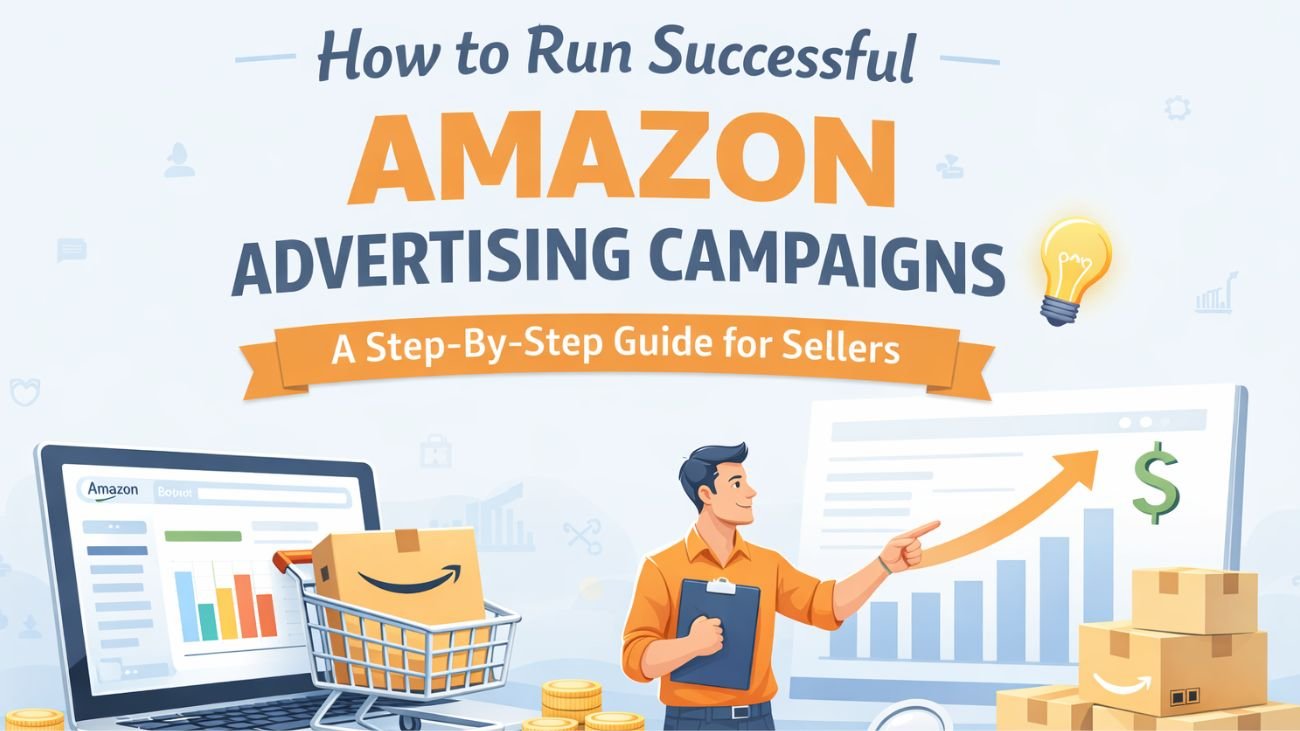
How to Run Successful Amazon Advertising Campaigns: A Step-By-Step Guide for Sellers

With thousands of other vendors seeking the same customers’ attention, relying solely on organic rankings is rarely sufficient to drive consistent sales. In addition to using this method, the use of Amazon advertising can assist products in gaining visibility by driving conversions.
Suppliers who are seeking additional growth can work with the Amazon account management service to develop systematic advertising plans that will enable their sustainable growth. When properly managed, campaigns using Amazon PPC can contribute to increased sales velocity, enhanced keyword ranking, and enable sellers to grow their business profitably.
This guide describes how to understand Amazon advertising to create, manage, and optimize campaigns for improved performance.
Basic Principles of Amazon Advertising
Amazon advertising is based on a Pay Per Click (PPC) basis through which sellers can place bids on specific keywords to display his/her own products in premium listing placements. During the time a customer performs a product search, Amazon uses a combination of factors such as the posted bid amount, product relevancy, and historical sales conversion to identify which advertisement will receive prominence on the display page.
Although Amazon SEO requires time to develop, advertising provides instant exposure to your product. Amazon advertising can offer several key benefits, including:
- Increasing visibility of products
- Accelerating sales
- Enhancing keyword ranking
- Offering greater control over scaling a business
Types of Ads You Must Know Before Starting an Amazon Advertising Campaign
When starting a campaign, it is essential that you have an understanding of all the primary ad formats available on Amazon. Below, we have discussed the two types of ads:
- Sponsored Product (SP) Ads
Sponsored Product (SP) Ads are the most common and user-friendly type of ad. They show up directly in search results and product pages of Amazon.
- Sponsored Brand (SB) Ads
A Sponsored Brand (SB) Ad displays your brand logo, a headline, and your choice of 1 or more products. Sponsored Brand (SB) Ads are great for building awareness about your brand, especially if it has been registered on Amazon.
- Sponsored Display (SD) Ads
Sponsored Display (SD) Ads will utilize both audience targeting and audience retargeting to bring back shoppers who have viewed your product(s) but did not purchase them.
A proper combination of these ad formats will increase both the performance of the campaign and your brand’s visibility.
Setting Up Before Running Campaigns on Amazon
Before launching a campaign, your product listing must be completely optimized. A promotion strategy will be ineffective if you do not convert visitors into sales by purchasing from your listing.
Below are examples of things that should be completed before running any ad format on Amazon:
- A title that is SEO optimized.
- Your images must be of the highest quality available.
- If available, implement A+ content
- Make sure that your pricing is competitive.
- That you have a consistent supply of your product in stock
- Set clear goals for the ad you wish to create, including sales, rank, or visibility.
Many sellers who are using Amazon seller account management services generally have superior results using Amazon ads due to the alignment of their product listing, pricing, and campaign goals prior to launching an ad.
Step-by-Step Guide
Step 1: Determine your Campaign Objective
It is important to have an objective in mind. If your organization plans to launch a new product, your goals will focus on achieving visibility and securing rankings for particular keywords and other related targets. Your targets for already marketed products will typically focus on generating profits and expanding market share.
Step 2: Selecting Between Automatic and Manual Campaigns
Automatic campaigns allow Amazon to help you identify keywords (search terms) for your listed product. When you’re looking to obtain keyword data, automatic campaigns are your best option.
Manual campaigns allow you greater control over targeting keywords as well as adjusting your bid for those keywords. The best way to get started is to run an Automatic campaign to identify high-performing keywords and then transition them to Manual campaigns.
Step 3: Do Your Research on Keywords
Keyword research is the foundation of a successful Amazon PPC Campaign.
You should be using a variety of keywords in your keyword research:
- Short-tail keywords (high-traffic) and
- Long-tail keywords (high-buying intent)
- Competitors’ keywords
- Branded keywords
Using a mixture of those keywords in your research, it will help your product show up in search results and help convert sales. Professional assistance from Amazon account management services will help you achieve the desired results.
How to Properly Structure Your Amazon PPC Campaigns
The best practices for Amazon PPC campaign organization require specific methods that need to be followed by advertisers include:
- 1 Product per Campaign
- Separate your campaigns into Broad, Phrase, and Exact match types.
- Use negative keywords to minimize wasted ad spend.
An organized structure to your campaigns makes it easy to see what keywords are producing results and what keywords are not producing results and should be paused.
Bidding and Budget Optimization
Your bid management impacts a large portion of your total advertising costs.
Start off with a reasonable bid and then adjust your bids as needed based on performance.
Helpful hints for managing bids:
- Be careful with using Dynamic Bidding.
- Increase bids on your profitable keywords.
- Decrease or pause keywords that are not converting.
- Monitor ACoS (Advertising Cost of Sale) on a regular basis.
Balanced ACoS allows you to continue making sales with your campaigns while continuing to be a profitable campaign.
Enhancing Performance In Your Amazon Advertising Campaigns
To have improved results in your advertising campaign, you must actively check specific key performance indicators such as:
- ACoS (Advertising Cost of Sale)
- CTR (Click-Through Rate)
- Conversion Rate
In addition, you should review your search term reports for winning keywords and toss the losing keywords over time. That will be the best way to achieve growth within your advertising campaigns.
Common Amazon PPC Mistakes to Avoid
Some of the most common ways that many Sellers waste their budgets with avoidable ad errors are through:
- Having Ads without an optimized listing
- Failing to implement Negative Keywords
- Increasing their daily ad budget too fast
- Failing To Review Their Ad Campaign Results Each Week.
Summary
From setting goals to monitoring performance stats, all of these aspects contribute to increasing visibility and profits. Sellers who utilize a data-driven approach to their businesses when optimizing can achieve consistent increases in both their paid/organic customer base. For sellers wanting to grow exponentially with their business and streamline their process, they should consider using Amazon account management services to help achieve long-term success on the Amazon platform.